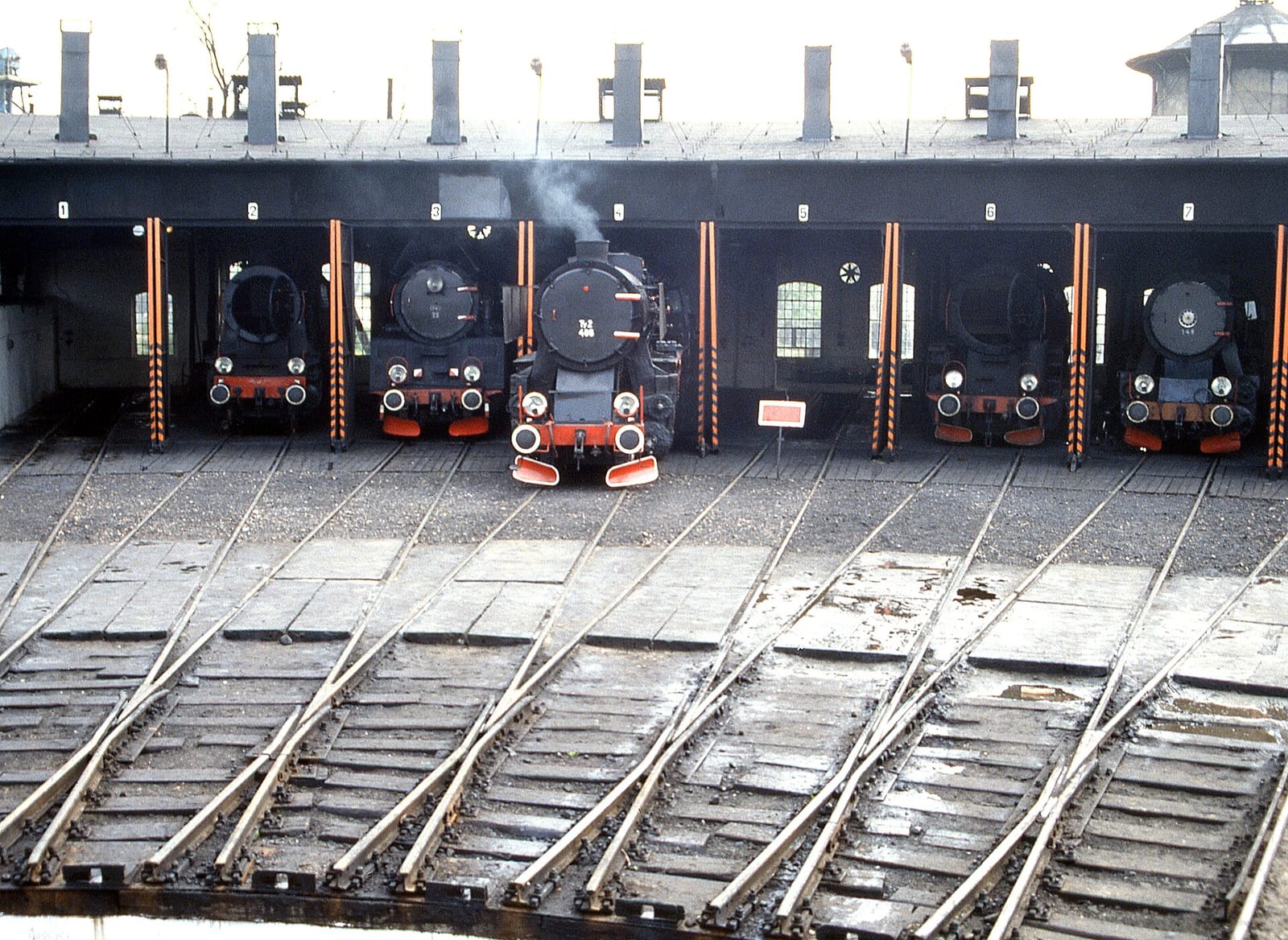
Wolsztyn · Scheduled Steam
kitmasterbloke / Wikimedia Commons · CC BY 2.0 · photographed 1992
- DistanceWolsztyn–Zbąszynek · and Wolsztyn–Poznań on Saturdays
- Duration39 minutes to Zbąszynek · about 2 hours to Poznań
- Best seasonAutumn and winter for the exhaust · any month it is running
Introduction
At twenty-eight minutes past two on a weekday afternoon, a train leaves Wolsztyn for Zbąszynek. It is in the public timetable. It costs an ordinary fare. It takes thirty-nine minutes. Some of the people on it are going home from work.
It is hauled by a steam locomotive built in the 1940s, and it is running tender-first, because there is nowhere to turn the engine at the far end.
That is Wolsztyn, and it is widely described as the last place in Europe where a steam locomotive still works scheduled main-line passenger trains — not excursions, not charters, not a preserved branch with volunteers in period costume, but trains in the national timetable that local people use.
What is actually running
Scheduled steam resumed on 9 March 2026, after a long gap. There are two workings:
- Weekdays: Wolsztyn 14:28 → Zbąszynek 15:07, returning 15:37 → Wolsztyn 16:23.
- Saturdays: Wolsztyn 10:46 → Poznań Główny 12:50, with a three-hour stop, returning 15:44 → Wolsztyn 17:41.
They are operated by Koleje Wielkopolskie, the regional train company, exactly as it operates everything else.
How close it came to ending
This page would be dishonest if it presented Wolsztyn as an unbroken tradition. It is not. It is a survival, and a precarious one.
The depot has been in what one railway journal describes as "a serious tourism crisis since the demise of the Wolsztyn Experience" in mid-2023 — the long-running scheme that let paying visitors from around the world learn to fire and drive the locomotives, and which underwrote a great deal of what happened here.
Then the engines themselves. Pt47-65, a Mikado — a 2-8-2 — was out of traffic for more than six months being overhauled. When it came back in March 2026 it was, in the reporting, the depot's only working big locomotive. The second, Ol49-69, a 2-6-2, had a newly finished boiler and no announced date for returning to steam.
So: scheduled steam traction in Europe currently depends on one serviceable engine at one depot in western Poland.
Why it survived at all
Wolsztyn is a small town in Wielkopolska with a working roundhouse, a turntable, a coaling stage and a shed full of locomotives — infrastructure that almost everywhere else in Europe was demolished in the 1970s. Poland ran main-line steam later than anyone else in Europe, into the 1990s, and at Wolsztyn the transition simply never quite finished.
What kept it going after that was a mixture of local determination, national heritage funding, and an extraordinary amount of foreign enthusiast money — British in particular — channelled through the Wolsztyn Experience. That last support is gone.
What it is like
Unglamorous, and much better for it. Polish steam is plain black, heavy and utilitarian; these are freight and mixed-traffic engines that were built to work. The stations are ordinary. The passengers mostly are not tourists.
You stand on a platform in a small Polish town and a large black locomotive comes in under a plume of steam, and then people with shopping get on.
It is running now — and at Wolsztyn, that has never been a formality.
The Journey
There are two journeys here and they are quite different in character. One is a proper two-hour run into a big city. The other is a thirty-nine-minute commuter shuttle, and is arguably the more remarkable of the two.
The Saturday train to Poznań
10:46 from Wolsztyn, chimney-first, and this is the one to plan for.
The line runs north-east across Wielkopolska — Greater Poland — which is flat, fertile, quiet farming country of long fields, willow lines and small brick villages. It is not dramatic and does not need to be: the drama is on the front of the train and audible from anywhere in it.
At Grodzisk Wielkopolski and the intermediate stops the engine takes water; at Wolsztyn it has already been coaled, watered and turned on the shed. Two hours after leaving you come into Poznań Główny, a busy modern main station, behind a steam locomotive, alongside electric multiple units — which is a genuinely strange sight and the reason people travel a long way for it.
Then a three-hour stop. That is not idle time: it is exactly enough for the Stary Rynek, Poznań's old market square, and the mechanical goats that butt heads on the town hall clock at noon — though you will have missed those, arriving at 12:50. Lunch, the cathedral, and back.
15:44 out of Poznań, 17:41 into Wolsztyn.
The weekday train to Zbąszynek
14:28, and it runs tender-first — the locomotive backwards, because there is no turntable at Zbąszynek. It is not elegant. It is entirely normal for a working railway, and it is the clearest possible signal that this is a transport service rather than a show.
Thirty-nine minutes to Zbąszynek, half an hour there, and 15:37 back, arriving 16:23.
Zbąszynek itself is a railway town created almost from nothing in the 1930s when the German-Polish border cut the old junction at Zbąszyń in two. There is not much to see. That is not the point: the point is riding an ordinary local train, on an ordinary afternoon, behind a steam engine, with people who are simply going home.
The shed
The best of Wolsztyn is not on the train at all.
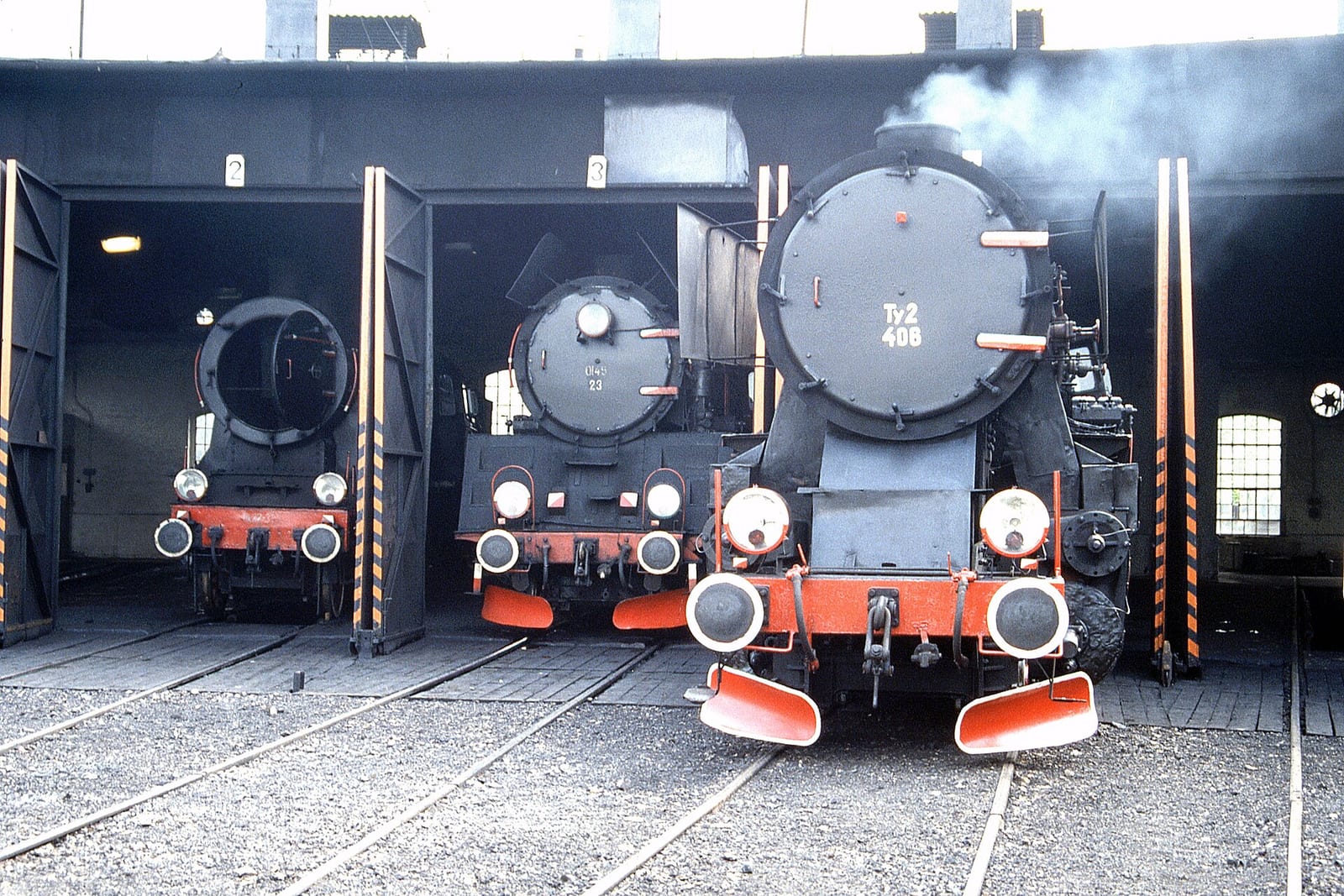
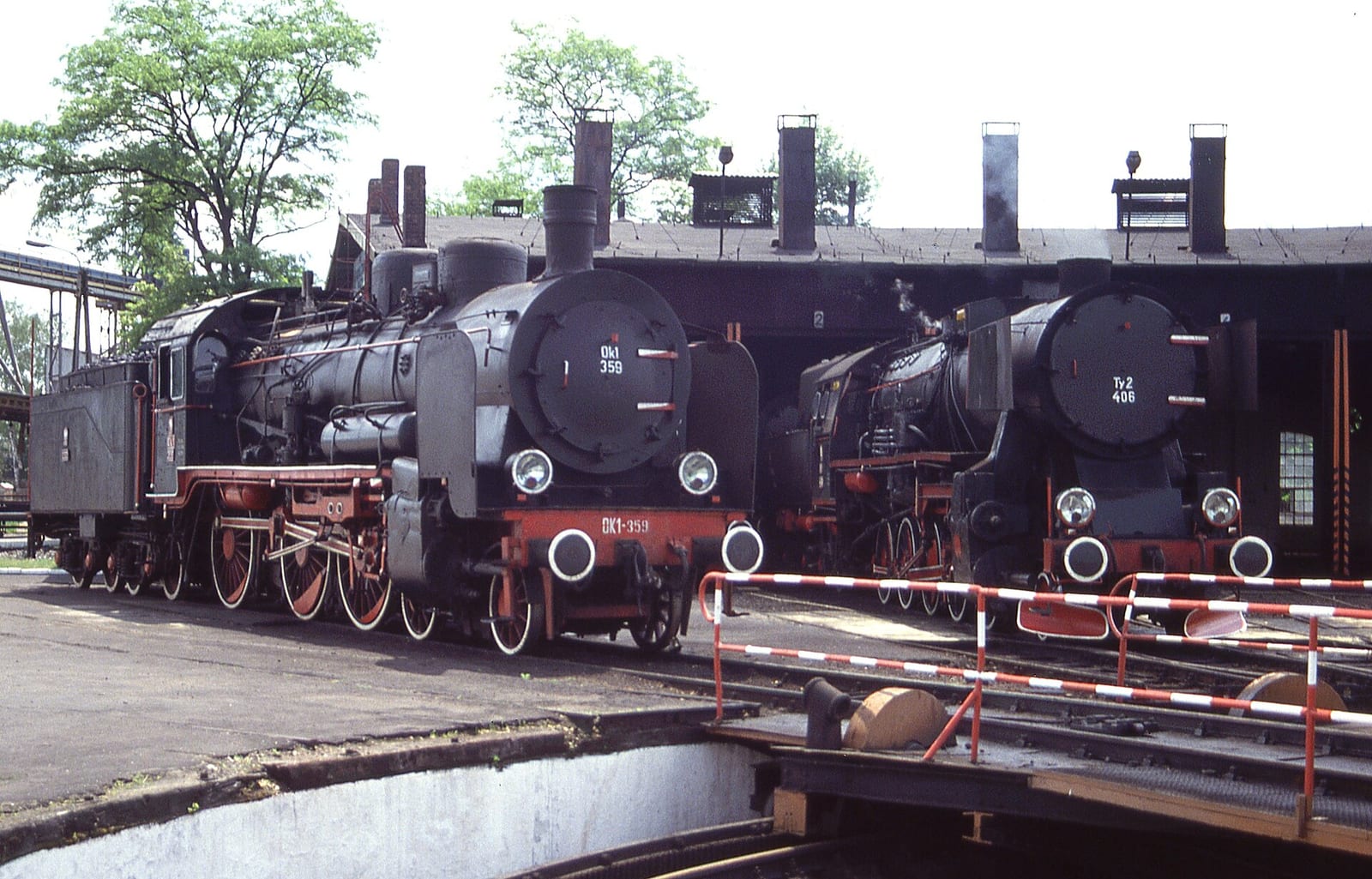
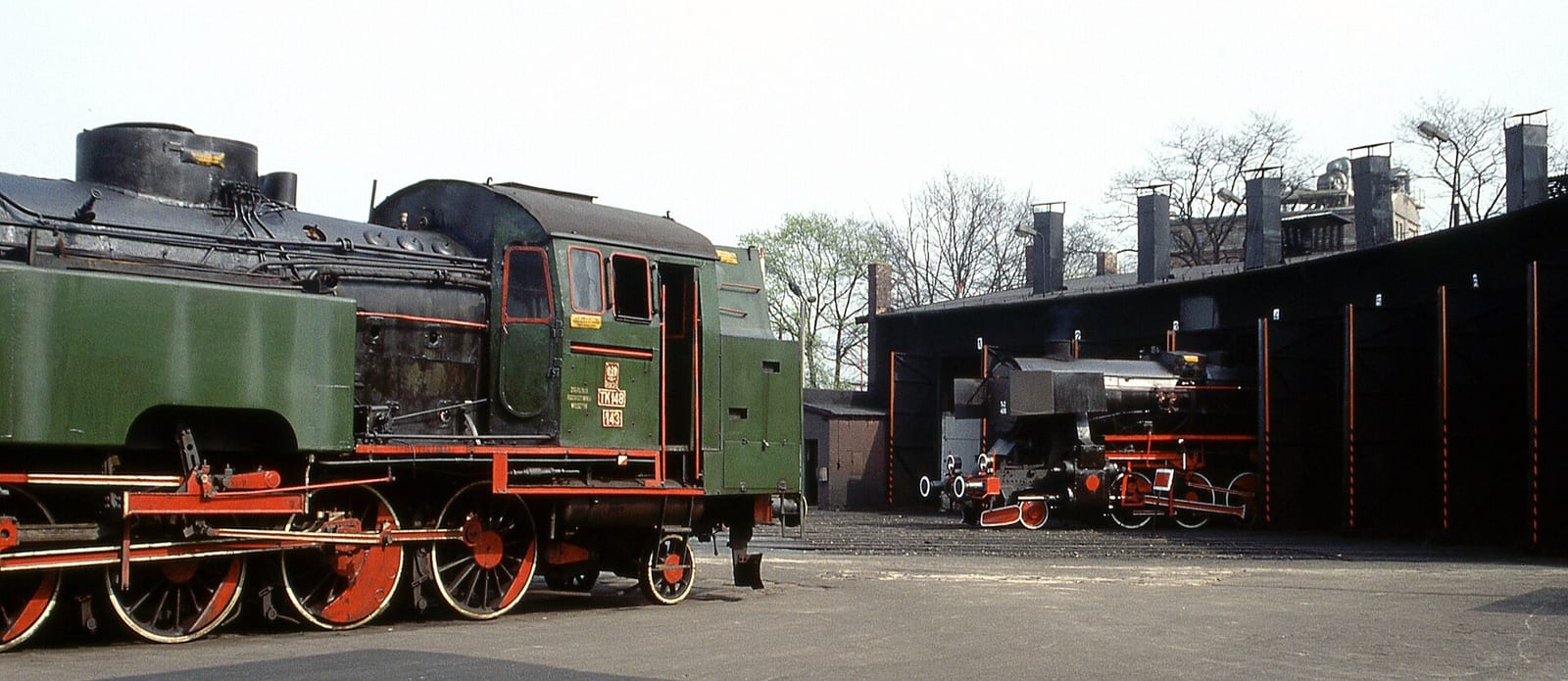
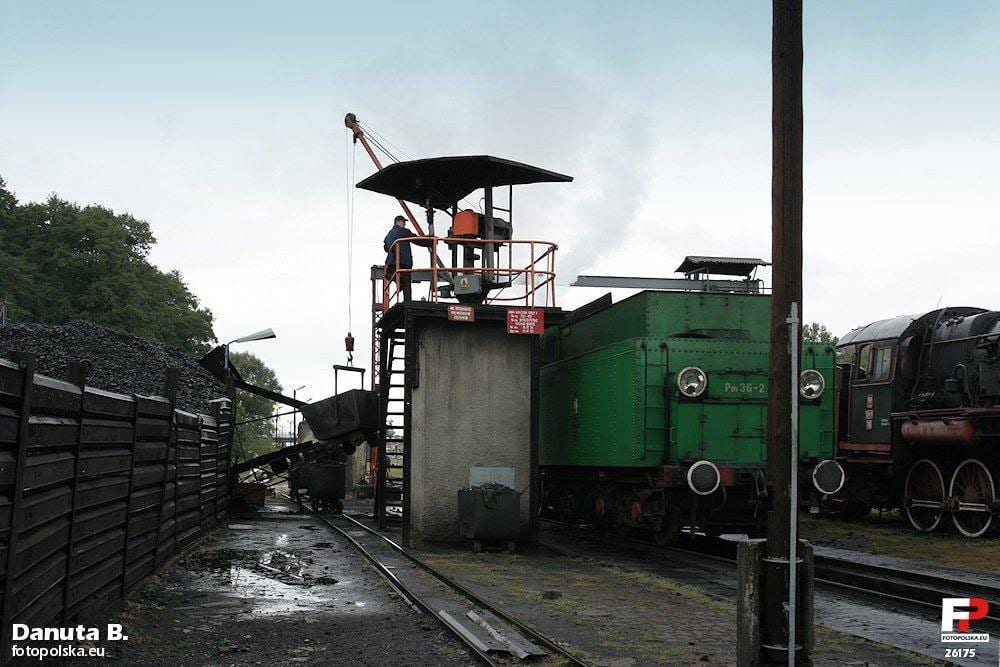
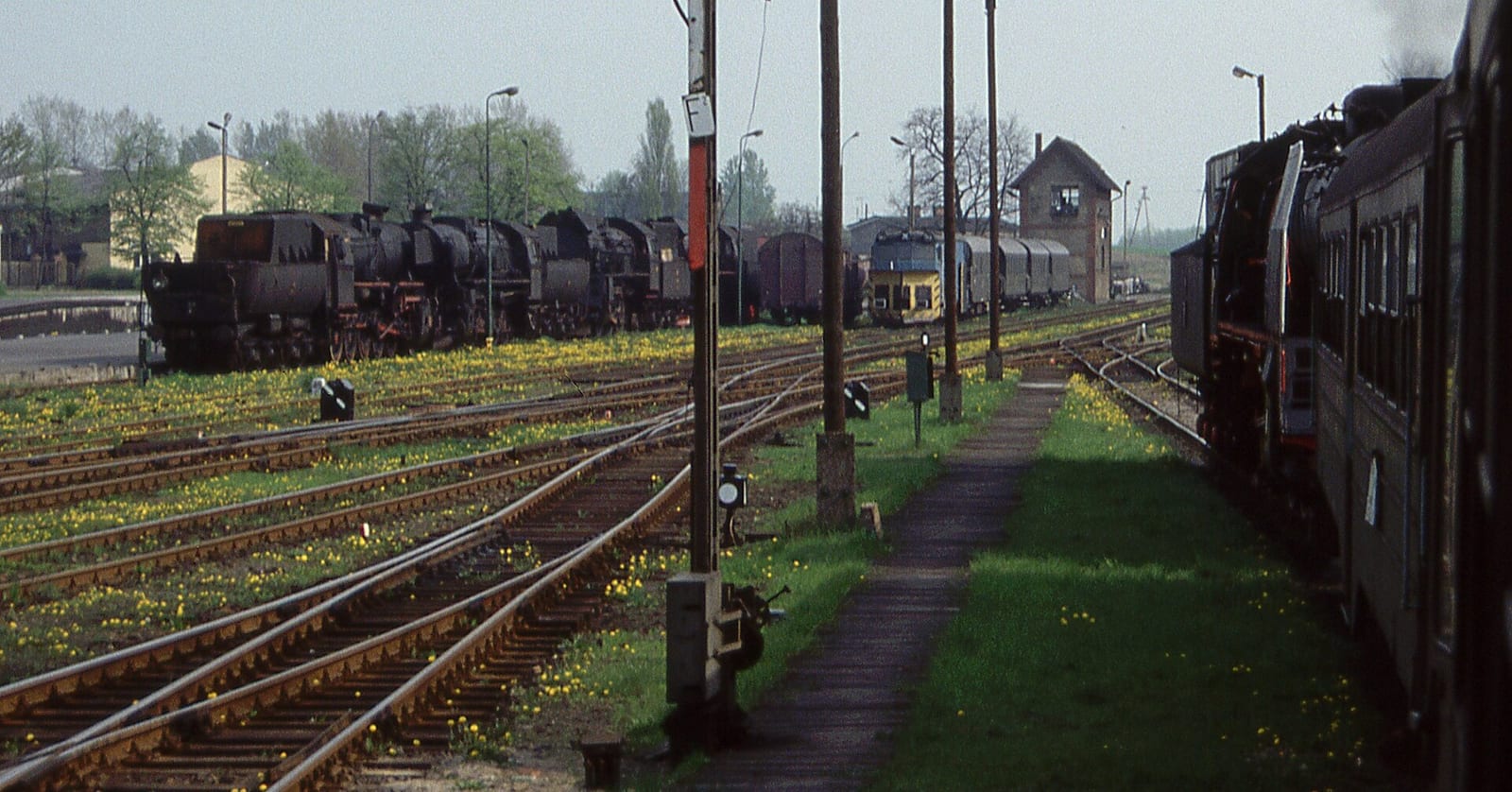
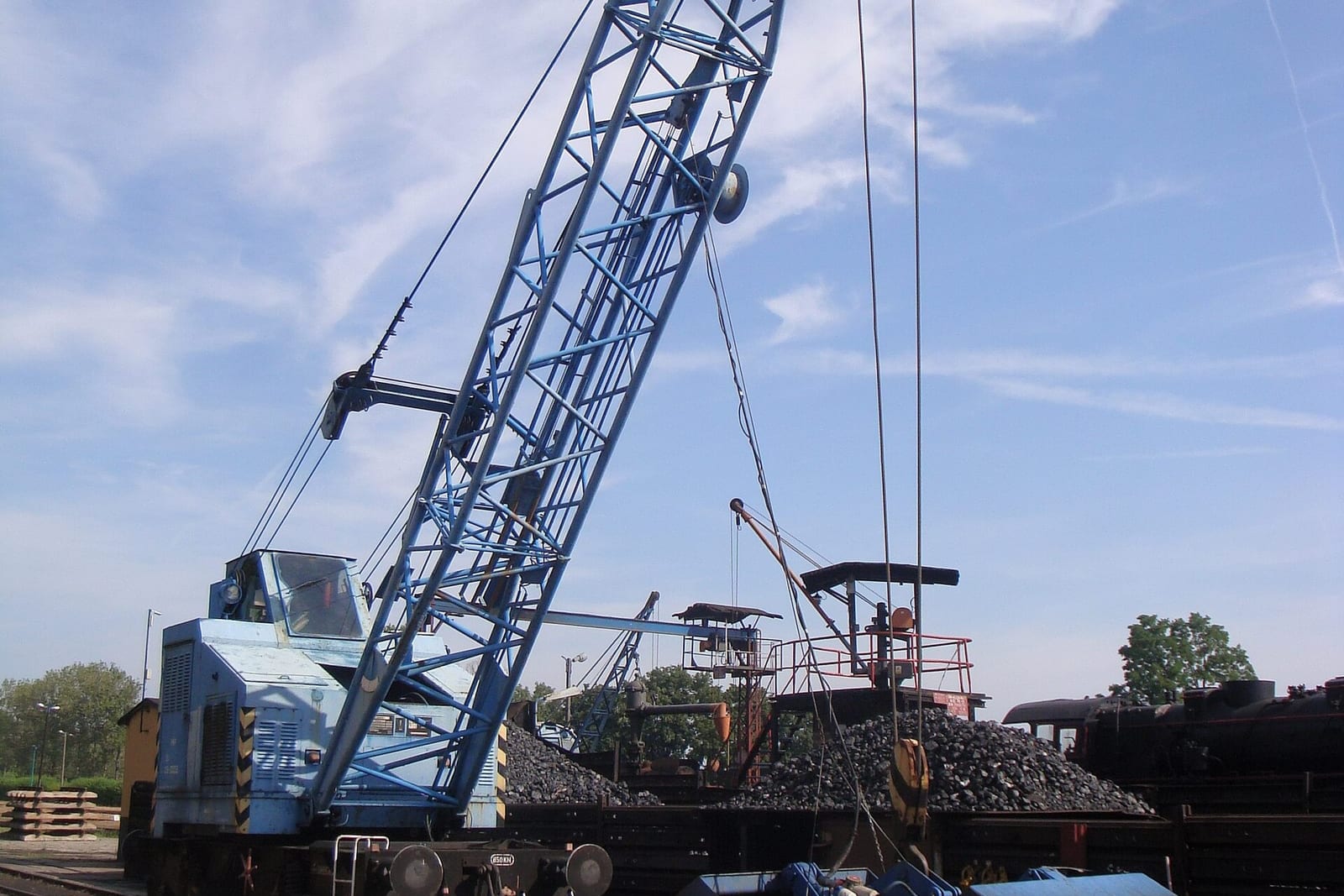
The parowozownia — the locomotive depot — has a working roundhouse built around a turntable, with locomotives standing in the stalls, a coaling stage, an ash pit and a breakdown crane. Almost everywhere else in Europe this apparatus was swept away fifty years ago; here it is still in daily use, because there is still a steam locomotive that needs coaling, watering, turning and cleaning before every trip.
There is a museum, and it is worth an hour. But go out onto the yard early instead, when the fire is being made up and the engine is being prepared, and the whole thing smells of coal smoke and hot oil.
The engines
Pt47-65 is the main-line locomotive: a 2-8-2 Mikado, big, black and Polish-built, the class that handled express passenger work in the post-war years. As of the March 2026 restart it was the depot's only serviceable large engine.
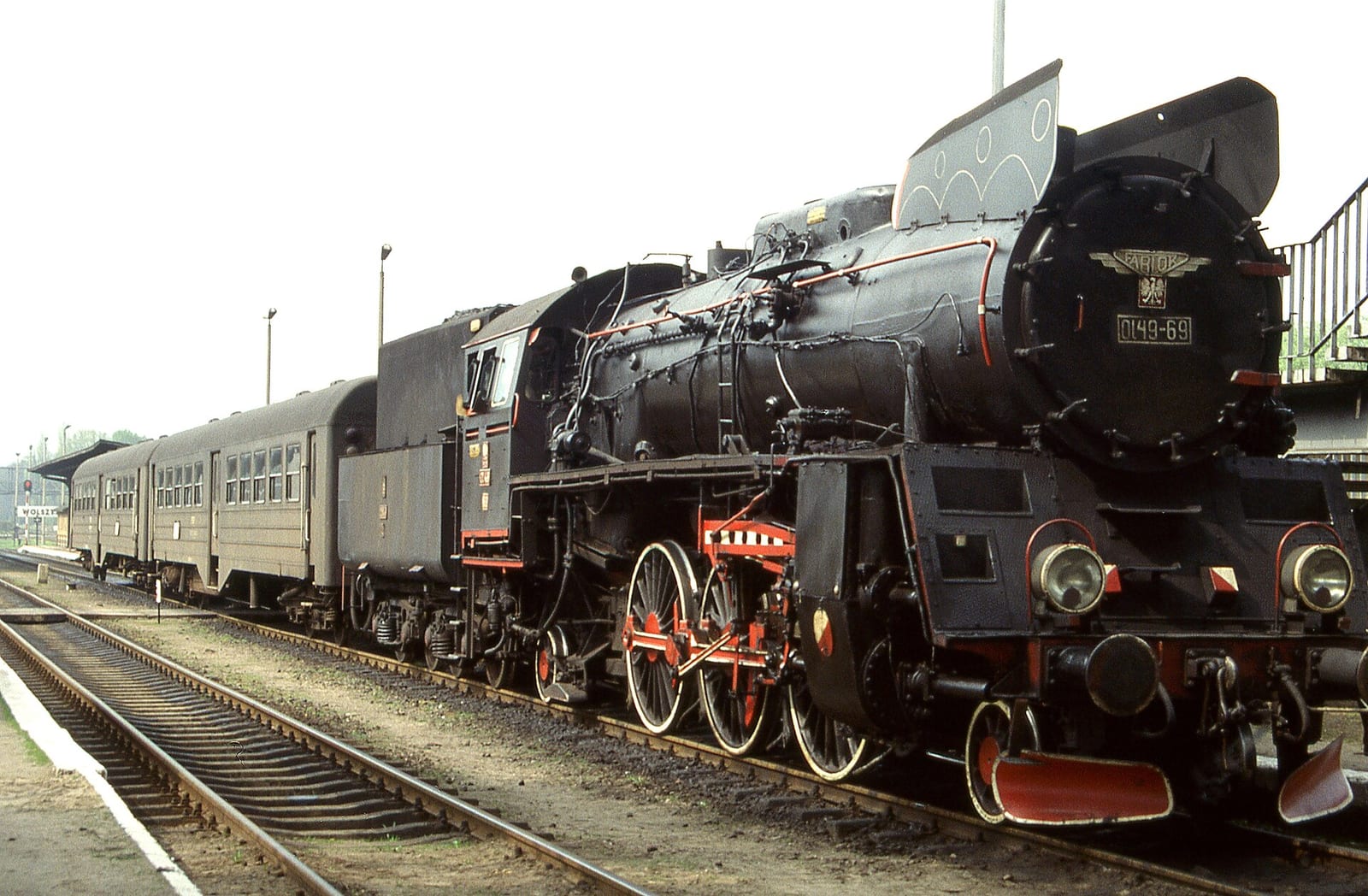
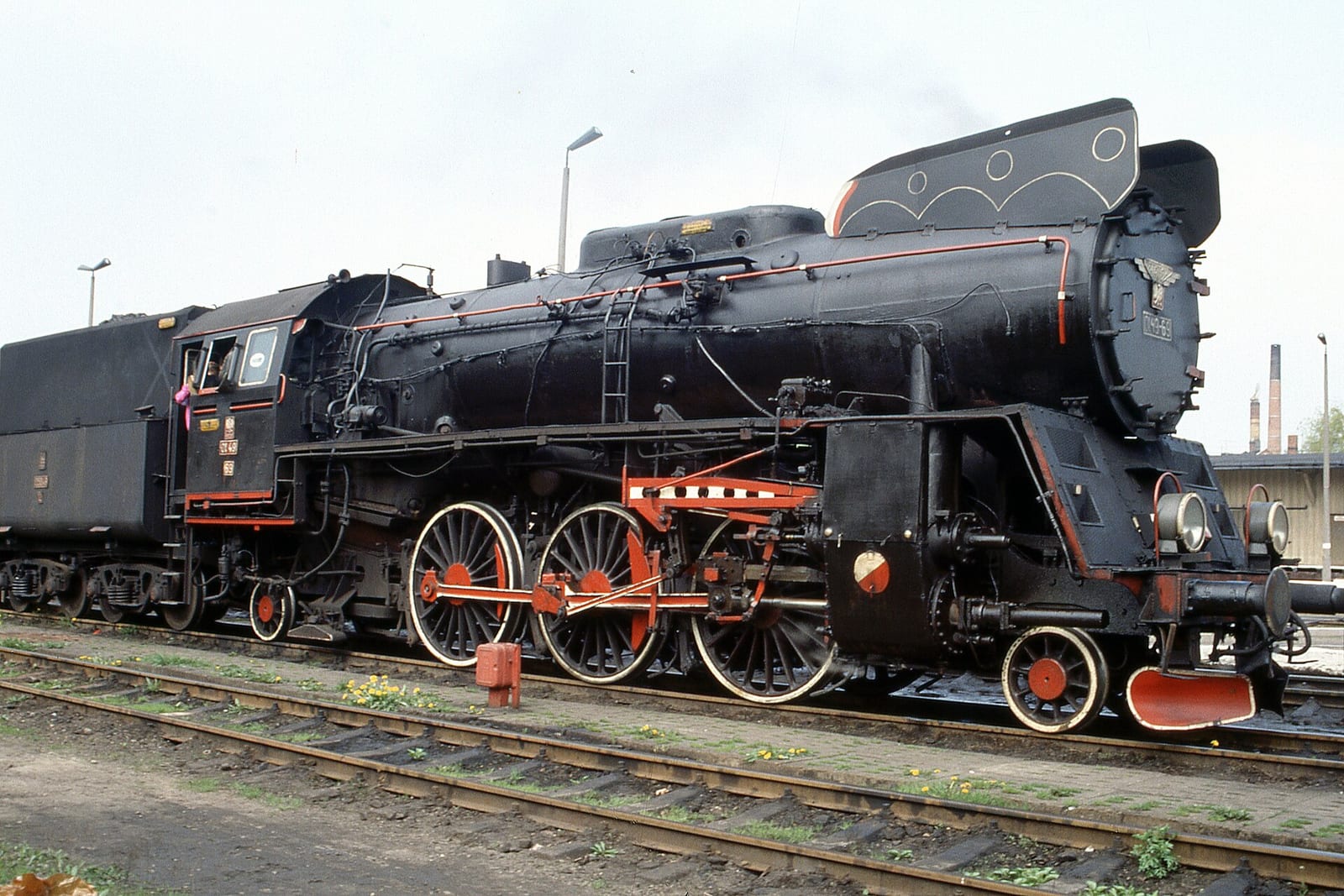
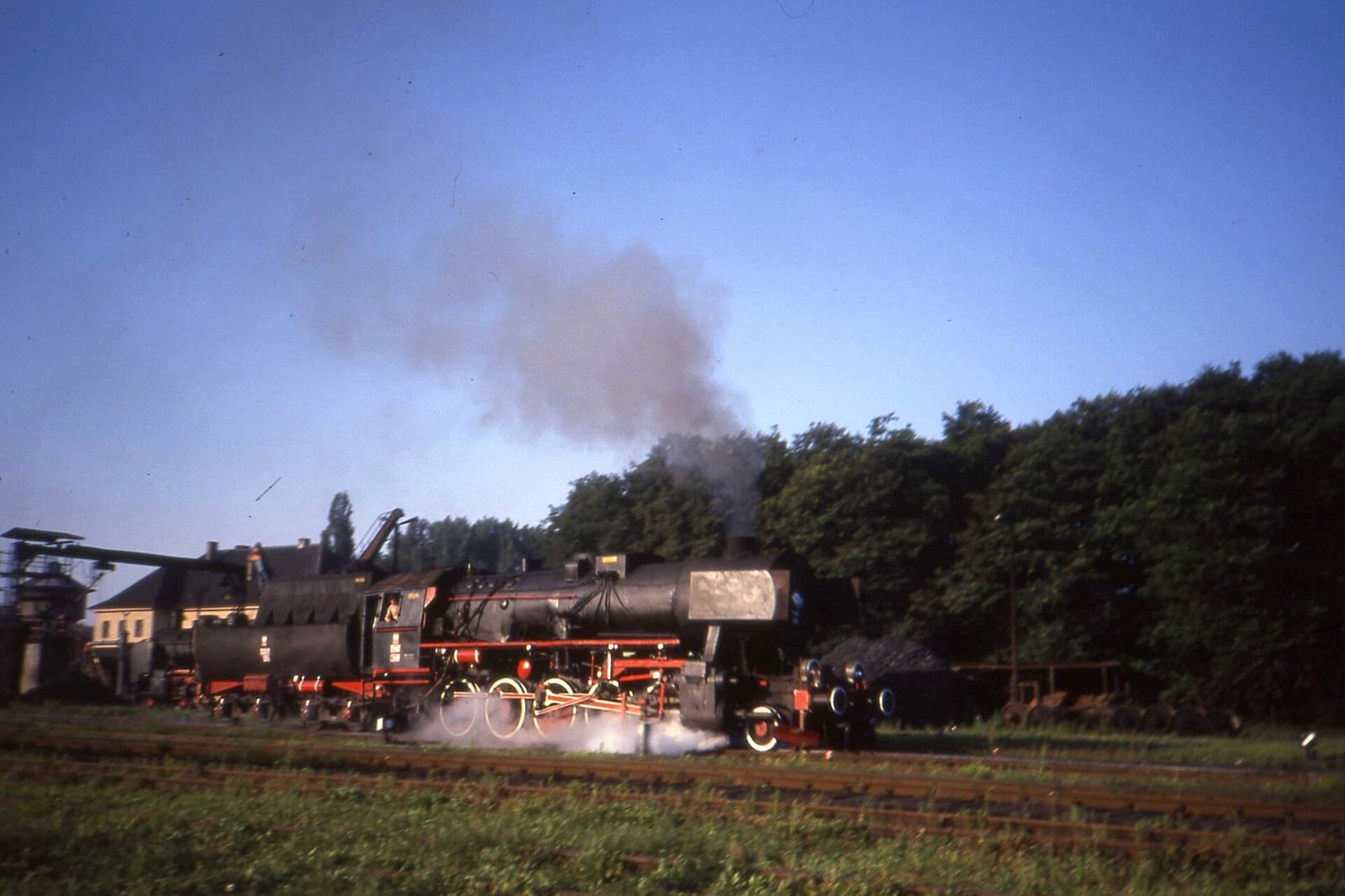
Ol49-69, a 2-6-2, is the one everybody is waiting for — freshly reboilered, no date announced. There is a photograph of it in our gallery taken at Wolsztyn on 3 May 1992, with a train for Leszno, thirty-four years before the depot was still hoping to get it back into traffic.
Practical notes
- Check it is running. This cannot be overstated: the service has stopped and restarted repeatedly, and rests on one engine.
- Ordinary tickets. No supplement for steam. Buy from Koleje Wielkopolskie at the station or in the app.
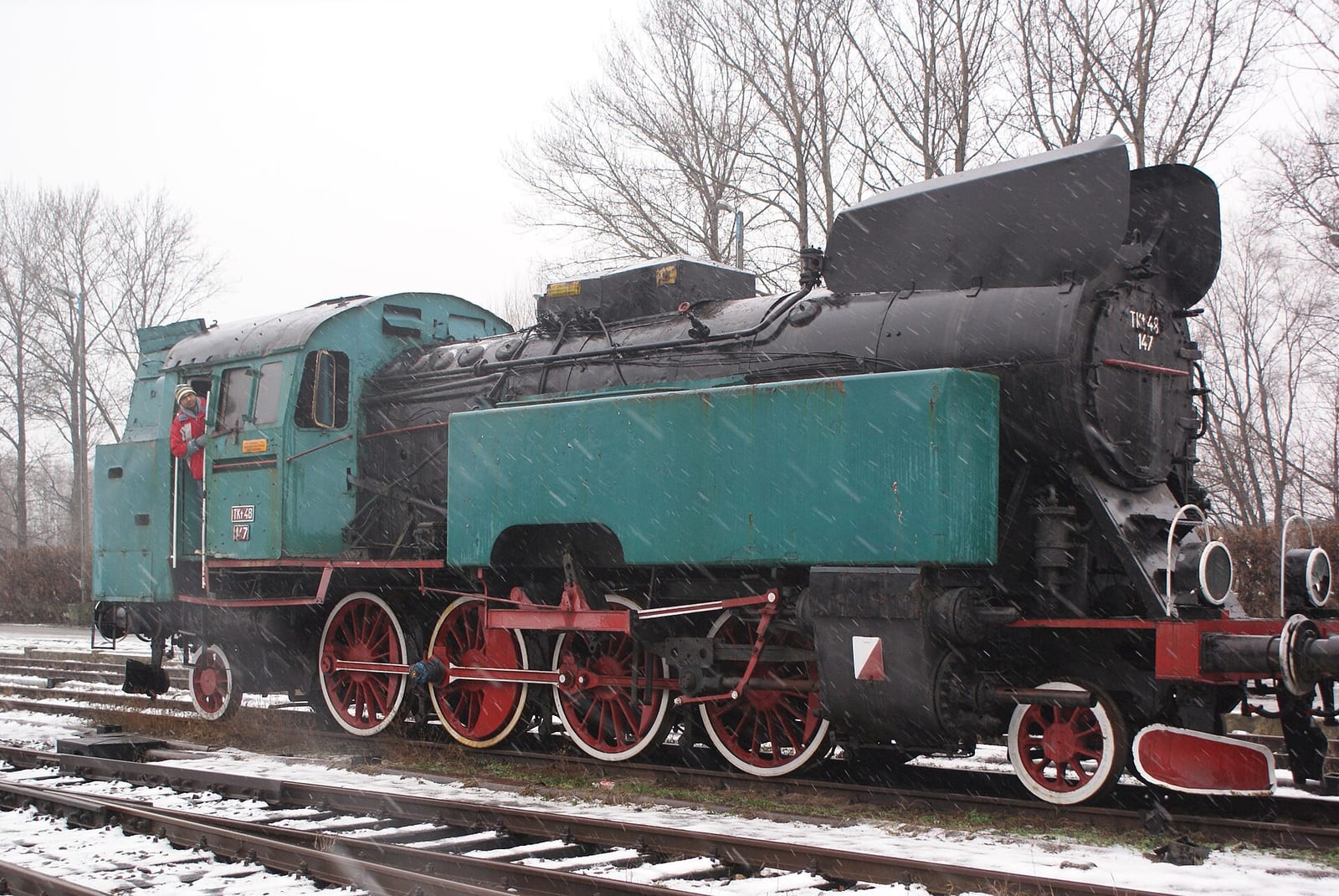
- Winter for the photographs. Cold air makes the exhaust stand up in a column; February is the enthusiasts' month.
- The annual gala, usually in spring, brings visiting locomotives and is the busiest weekend of the year.
- Wolsztyn is about 70 km south-west of Poznań and reachable by train — arrive the day before if you want the morning at the shed.
Along the route
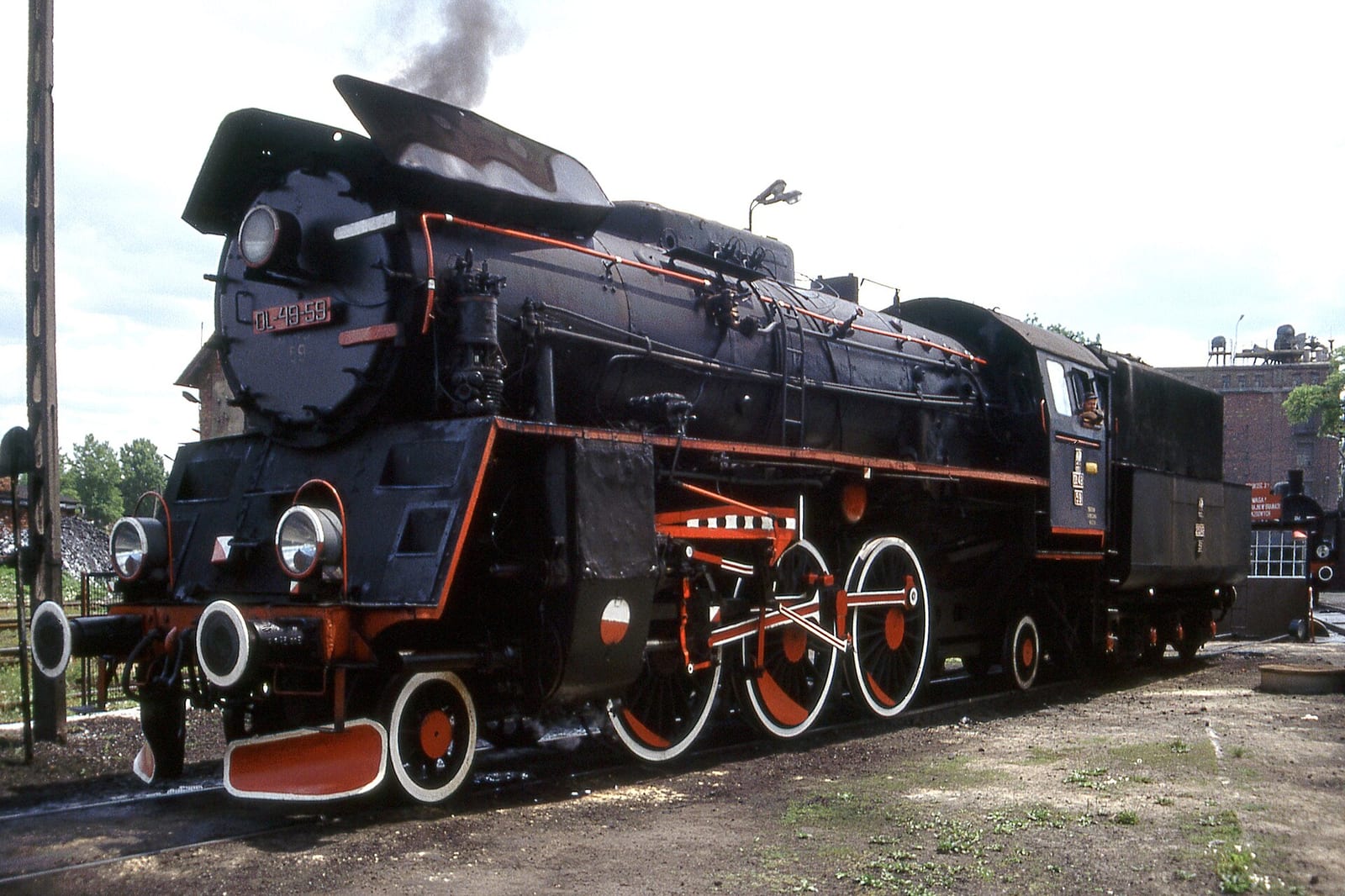
kitmasterbloke / Wikimedia Commons · CC BY 2.0 · photographed 3 May 1992A steam train in the public timetable
This is not a preserved railway. The Wolsztyn steam workings are ordinary scheduled passenger trains, in the same timetable as everything else, at ordinary fares, calling at ordinary stations. People get on them to go to work. Wolsztyn is widely described as the last place in Europe where that is still true.kitmasterbloke / Wikimedia Commons · CC BY 2.0 · photographed 3 May 1992It nearly ended
Be clear about how close this came to stopping. The depot has been in what one railway journal calls a serious crisis since the Wolsztyn Experience ended in mid-2023, and Pt47-65 was out of traffic for more than six months being overhauled.kitmasterbloke / Wikimedia Commons · CC BY 2.0 · photographed 3 May 1992One working engine
The depot's main-line locomotive is Pt47-65, a Mikado, and as of March 2026 it was its only working big loco. The second had a newly completed boiler and no announced return date. A scheduled steam service in Europe rests on a single serviceable locomotive.A bit of history
Culture & experiences along the way
kitmasterbloke / Wikimedia Commons · CC BY 2.0Take the Saturday train to Poznań
The one to do. 10:46 from Wolsztyn, chimney-first, arriving Poznań Główny at 12:50 — two hours of steam haulage into a major city, on a normal ticket. There is a three-hour stop before the 15:44 back, which is exactly enough for Poznań's old market square and lunch. Then two hours of steam home, arriving 17:41.kitmasterbloke / Wikimedia Commons · CC BY 2.0 · photographed 3 May 1992Stand at the shed
The roundhouse and turntable at Wolsztyn are the real attraction, and they are working rather than preserved: engines are coaled, watered, turned and prepared here every day the service runs. There is a museum, but the best of it is simply being on the yard at seven in the morning while a Mikado is being got ready.TijsB / Wikimedia Commons · CC BY-SA 2.0Go in the cold
Steam photographs best when the air is cold enough to condense the exhaust into a solid white column, which is why the enthusiasts who have kept this place alive turn up in February, not August. The annual steam gala at Wolsztyn, usually held in spring, brings visiting locomotives and is the busiest weekend of the year.Timetables
Check before you travel. Scheduled steam at Wolsztyn has stopped and restarted several times, and the current service resumed only in March 2026.
What is running (as of July 2026)
Steam-hauled scheduled services resumed on Monday 9 March 2026 (the weekday working) and Saturday 7 March 2026 (the Poznań working), operated by Koleje Wielkopolskie.
Weekday — Wolsztyn to Zbąszynek and back
| Wolsztyn | 14:28 — runs tender-first |
| Zbąszynek | 15:07 |
| Zbąszynek | 15:37 |
| Wolsztyn | 16:23 |
Thirty-nine minutes each way.
Saturdays — Wolsztyn to Poznań and back
| Wolsztyn | 10:46 — chimney-first |
| Poznań Główny | 12:50 |
| Poznań Główny | 15:44 |
| Wolsztyn | 17:41 |
About two hours each way, with a three-hour stop in Poznań.
The locomotives
- Pt47-65 — a 2-8-2 Mikado, the depot's main-line engine. It had been under overhaul for more than six months before the March 2026 restart, and was then described as the depot's only working big locomotive.
- Ol49-69 — a 2-6-2, with a newly completed boiler and no announced return date as of March 2026.
A scheduled steam service depending on one serviceable engine is fragile by definition. If the locomotive is stopped, so is the service.
Why this needs checking rather than assuming
The depot has been in "a serious tourism crisis since the demise of the Wolsztyn Experience" in mid-2023, in the words of the railway press — that being the scheme through which paying visitors from abroad, many of them British, learned to fire and drive the engines and which underwrote much of the operation.
Scheduled steam has returned before after gaps, notably in October 2023. Treat each restart as provisional.
Before you travel, confirm with Koleje Wielkopolskie (opens in a new tab) or the depot, and check the Polish rail planner for your date.
Fares
Ordinary Koleje Wielkopolskie fares — there is no supplement for steam haulage, which is the single most delightful fact about the whole operation. Buy at the station, from a machine, or in the KW app.
Poland uses the złoty (PLN).
Getting to Wolsztyn
Wolsztyn is about 70 km south-west of Poznań. Koleje Wielkopolskie run ordinary diesel services from Poznań Główny and from Leszno, taking roughly an hour and a half from Poznań. The town is small and the station is central.
If you want the shed in the morning, stay the night in Wolsztyn.
The gala
Wolsztyn holds an annual steam gala, generally in spring, which brings visiting locomotives from around Poland and further afield. It is the busiest weekend of the year and worth timing a visit around — check the depot's own announcements for the date.
Operator: Koleje Wielkopolskie — koleje-wielkopolskie.com.pl (opens in a new tab). Position as of July 2026.
Tickets
There is no special ticket, no booking and no premium. That is the point of Wolsztyn. These are ordinary Koleje Wielkopolskie services, so buy an ordinary regional ticket at the window, in the app, or from the conductor if the station is unstaffed — and there is no surcharge for the steam locomotive.
⚠️ What does need checking is that it is running at all. Scheduled steam only resumed on 9 March 2026 after a long gap, and the service depends on Pt47-65, described that month as the depot's only working main-line locomotive. Confirm for your date and have a fallback, because diesels run the same routes. The parowozownia — roundhouse, turntable and museum — charges its own admission and is at least as much of the attraction as the ride; go early on a running day.
Book your tickets
Wolsztyn to Poznań · Saturdays
Two hours of steam, on a normal ticket
The Saturday working: 10:46 from Wolsztyn to Poznań Główny, back at 15:44. An ordinary Koleje Wielkopolskie ticket, bought at the station or in the app — there is no premium for the steam locomotive on the front. Check before travelling; the service has stopped and restarted repeatedly.
Book Tickets (opens in a new tab, on Koleje Wielkopolskie)via Koleje WielkopolskieWolsztyn to Zbąszynek · weekdays
The everyday steam commuter train
The weekday round trip: 14:28 out — tender-first — arriving 15:07, returning 15:37 and back at 16:23. Thirty-nine minutes each way, and the more remarkable of the two because it is so completely unremarkable to the people using it.
Book Tickets (opens in a new tab, on Koleje Wielkopolskie)via Koleje WielkopolskieRail Passes
Content coming soon.
Places to Visit
Wolsztyn is a small town in Wielkopolska and the railway is its reason to be on anyone's map — but the region around it is pleasant, and Poznań at the end of the Saturday train is a proper city.
The main event is of course the locomotive depot itself: a working roundhouse built around a turntable, with a coaling stage, ash pit and breakdown crane. Almost every comparable facility in Europe was demolished decades ago.
Beyond the six places carded here, Zbąszynek — the weekday terminus — is a planned railway town of the 1930s, built from nothing when the redrawn German-Polish border cut the existing junction at Zbąszyń in half. Leszno, south of Wolsztyn and historically tied to the depot's workings, has a handsome Baroque centre and a strong gliding tradition.
In Poznań, the Poznań 1956 memorial commemorates the workers' uprising that preceded Hungary's by four months. Eat rogal świętomarciński, the local croissant with white poppy seed filling, which has protected status.
 A.Savin, Wikipedia · Free Art License · cropped
Poznań's town hall
The Stary Rynek is a large and beautifully rebuilt Renaissance square, and the town hall in the middle of it is the finest thing in the city: first built in the late 13th century after Poznań's founding in 1253, then remodelled with its ornate loggia by Giovanni Battista di Quadro between 1550 and 1560. Every day at noon two mechanical goats butt heads above the clock, and an obedient crowd gathers to watch. Tomasz Stachowiak / Wikimedia Commons · CC BY-SA 3.0 PL · cropped
Ostrów Tumski
An island between two arms of the Warta, and the oldest part of Poznań — the rulers of the early Polish state had one of their palaces here in the 10th century. The cathedral of Saints Peter and Paul is the oldest cathedral in Poland and dates from the same century. The island became a national Historic Monument on 28 November 2008. Ten minutes from the Stary Rynek and a different world. Al.witkowski / Wikimedia Commons · CC BY-SA 4.0 · cropped
Kórnik Castle
South of Poznań, a 14th-century castle remodelled in 1855 partly to plans by Karl Friedrich Schinkel for Tytus Działyński, and left to the Polish state in 1924 by the childless Count Władysław Zamoyski along with its library and grounds. Those grounds are the Kórnik Arboretum — over 40 hectares and 3,300 species, the oldest and largest in Poland and the fourth largest in Europe. Come for the rhododendrons in May. Jerzy Strzelecki / Wikimedia Commons · CC BY-SA 4.0 · cropped
Rogalin
A Baroque-and-Classical palace of the Raczyński family with a painting gallery, a French garden and a mausoleum church — but the reason people come is the oaks. The floodplain meadows along the Warta hold Poland's oldest oak trees, several of them hollow and propped, the three most famous named Lech, Czech and Rus after the legendary founding brothers. The whole estate is a national Historic Monument, the largest in Poland. Michumks1 / Wikimedia Commons · CC BY-SA 4.0 · cropped
The Wolsztyn lakes
The town sits between Jezioro Wolsztyńskie and Jezioro Berzyńskie, and Wielkopolska is full of water like this. There is swimming, sailing and a shore path, and the tourism is emphatically Polish rather than international — which is much of the appeal. If you have come for a morning at the depot and have an afternoon left over, this is where it goes. MOs810 / Wikimedia Commons · CC BY-SA 4.0 · cropped
The skansen
An open-air museum of Wielkopolska farm buildings — timber cottages, barns and outhouses moved here and re-erected on the lake shore. It is one of three museums in a town of thirteen thousand people, alongside the house where Robert Koch worked as a district physician in the 1870s and a museum to the sculptor Marcin Rożek, who was born here and died at Auschwitz. A quiet half-hour, and a short walk from the station.Where to Sleep
If the shed matters to you — and it should — sleep in Wolsztyn. If you only want to ride the Saturday train, Poznań works.
Wolsztyn
A small town of about thirteen thousand people, with a modest range of hotels, guesthouses and agroturystyka rooms, several of them by the lakes. Nothing is expensive and nothing is grand.
Staying here is the right call for one reason: it lets you be on the depot yard early on a running morning, while the locomotive is being coaled, watered and prepared. That is the best hour of the visit, and you cannot get it by arriving from Poznań on the 09:00.
Book ahead for the annual steam gala in spring, when the town fills with photographers from across Europe.
Poznań
Ninety minutes away and a proper city, with the full range from hostels to international hotels. The Stary Rynek and the streets around it are the obvious choice — restored Renaissance houses, good restaurants and bars, and the station a tram ride away.
This works well if you are doing the Saturday train, which starts at Wolsztyn but which you could join at Poznań for the return leg — though you would then miss the depot entirely, which would be a mistake.
Leszno
South of Wolsztyn, a larger town with a Baroque centre and more choice than Wolsztyn itself, historically tied to the same railway network. A reasonable middle option.
Around the lakes
Wielkopolska is lake country and there is a scatter of guesthouses, campsites and holiday houses around Jezioro Wolsztyńskie and Jezioro Berzyńskie, mostly used by Polish families in summer. Quiet, cheap and pleasant, and a short walk or ride from the station.
When to go
February if you are here for photographs — cold air is what makes a steam exhaust stand up in a solid column, and the enthusiasts who have kept this place alive know it.
Spring for the gala, and for the best chance of both locomotives being in traffic.
Any month it is running for the trains themselves. That last clause is doing real work: confirm before you book anything, because Wolsztyn's steam service has stopped and restarted more than once and currently depends on a single serviceable engine.
Comments
Facebook comments
Facebook will see your IP address and can set cookies. If you are signed in to Facebook it can connect this visit to your account.
Loads Facebook (Meta) content from now on, across the site. Undo this at any time.