Eastern & Oriental Express
Two hundred percent / Wikimedia Commons · CC BY-SA 3.0
- DistanceSingapore–Butterworth (round trip)
- Duration4 days / 3 nights
- Best seasonMar–Oct (Wild Malaysia)
Introduction
Start with the best fact about this train, because nobody believes it.
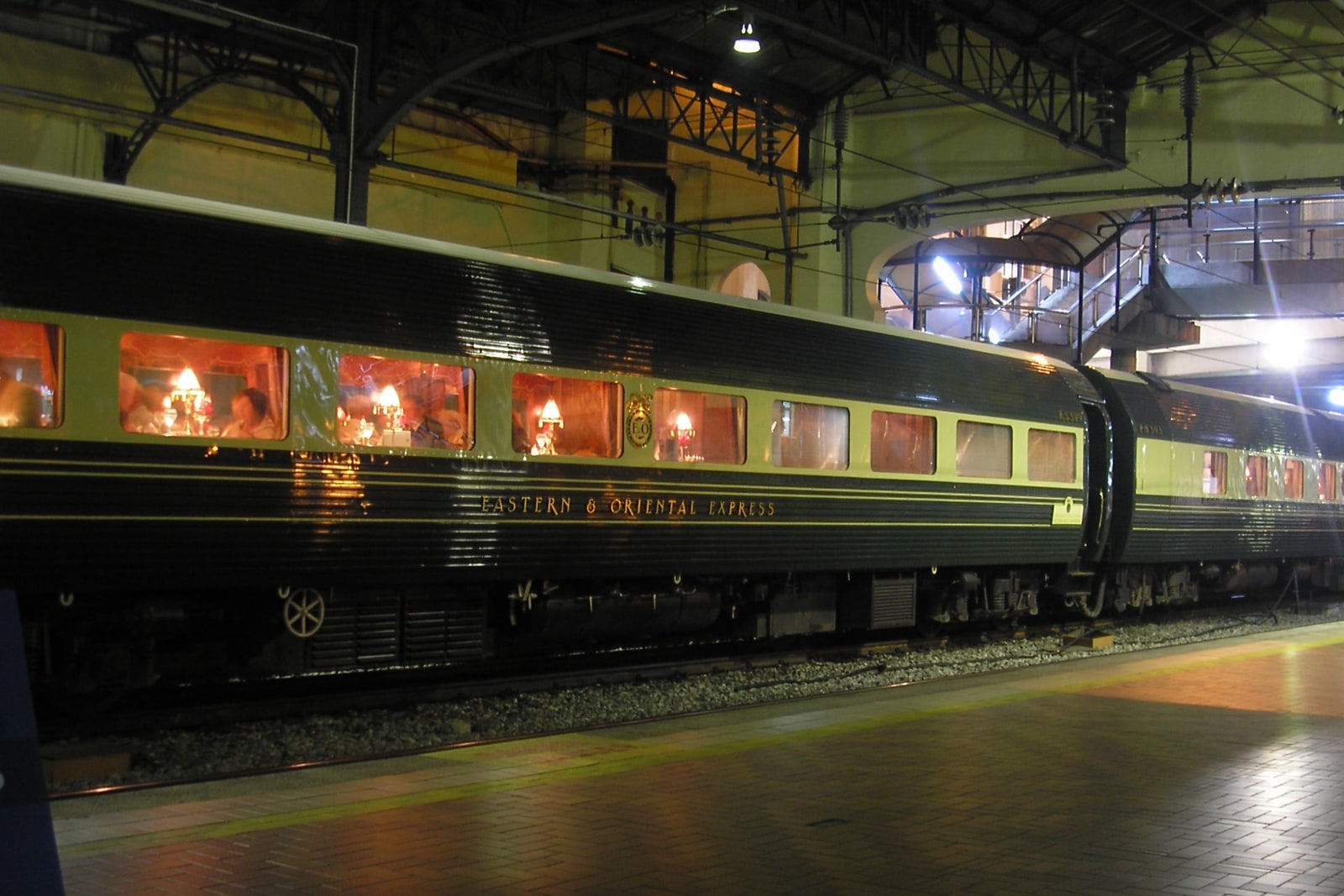
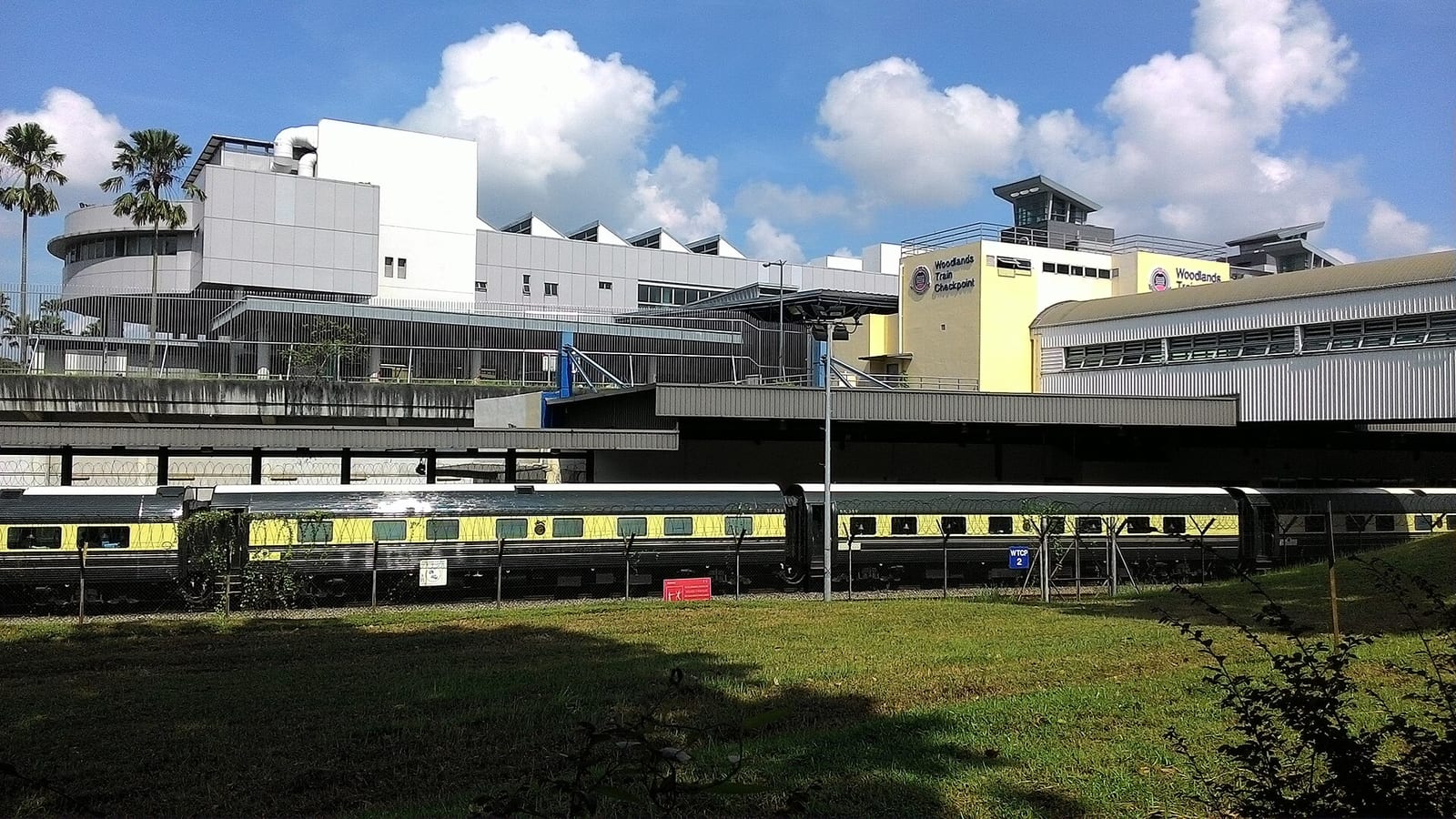
The Eastern & Oriental Express — teak panelling, marquetry, a pianist in the bar car, one of the two or three most glamorous trains on earth — is made of New Zealand hand-me-downs. Its thirty-one carriages were built by Hitachi and Nippon Sharyo in Japan in 1972, and they spent their first life as the Silver Star, an overnight service between Auckland and Wellington. When that ended, twenty-four of them were regauged from 1,067 mm down to metre gauge, shipped to Southeast Asia, gutted and rebuilt into something unrecognisable.
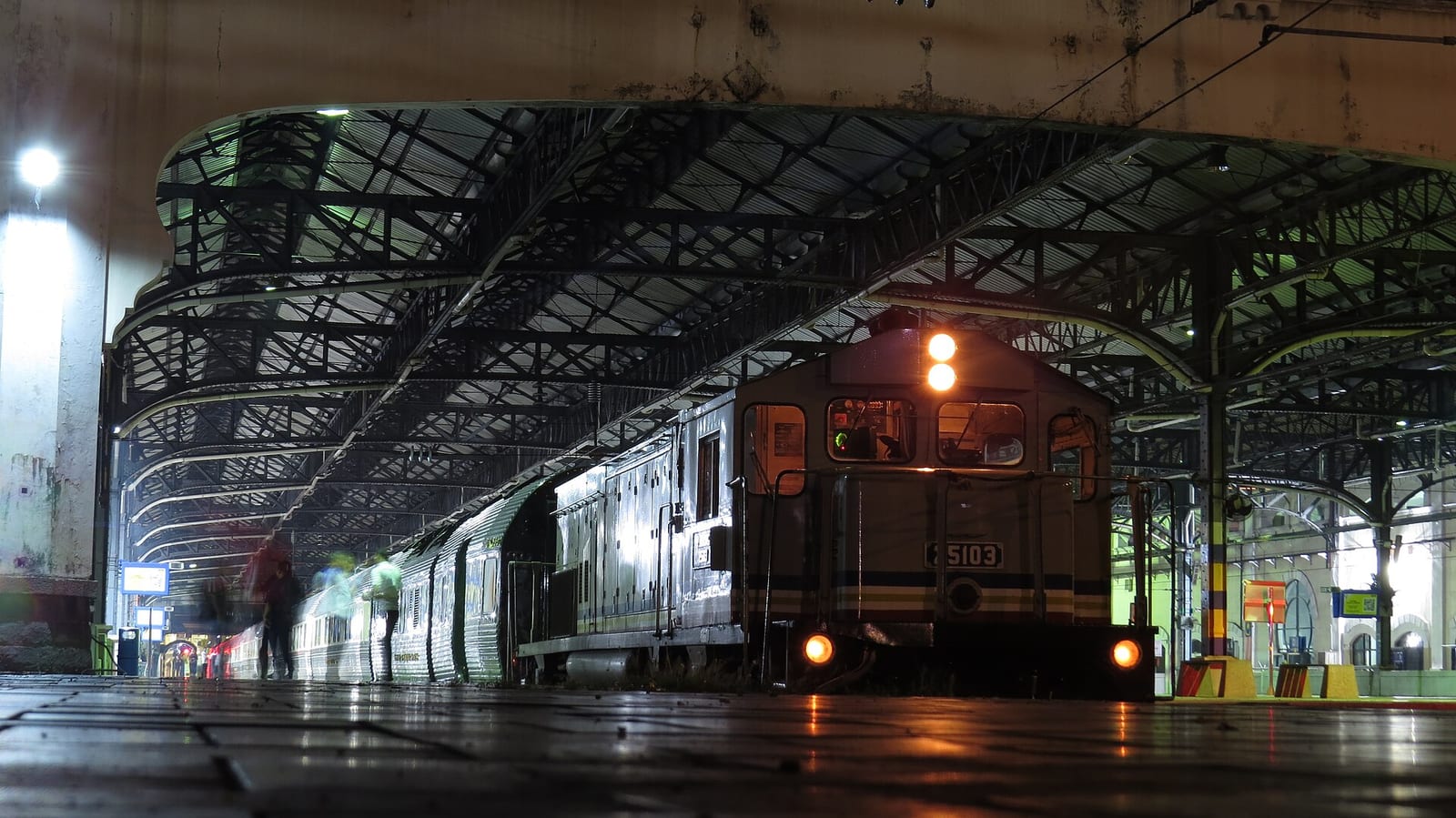
The train they became first ran on 19 September 1993, from Singapore's Tanjong Pagar station to Bangkok — four days and three nights by way of Kuala Lumpur, Butterworth and the bridge on the River Kwai. For thirty years that run was the E&O, and it is still what most of the internet will tell you the E&O is.
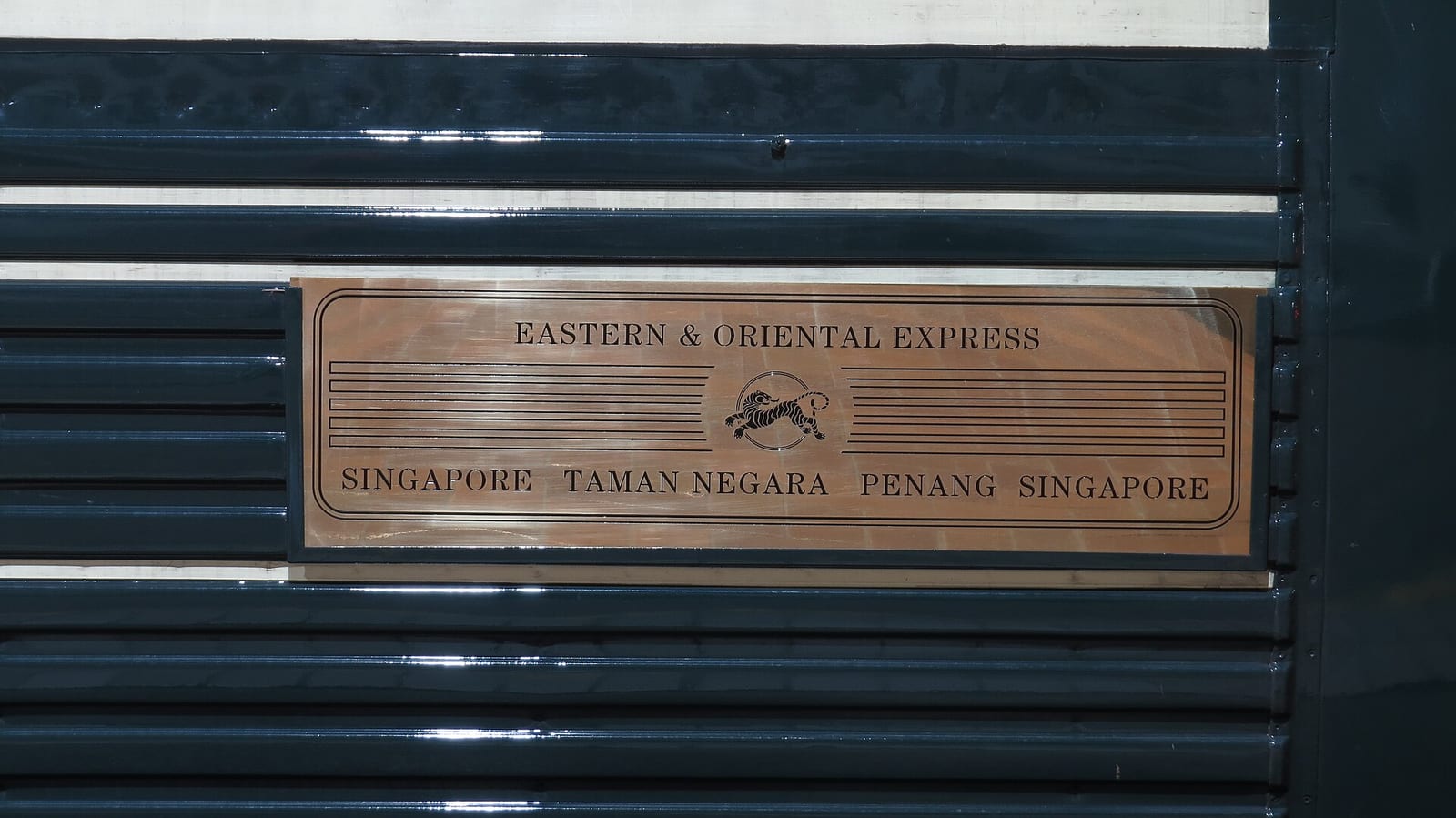
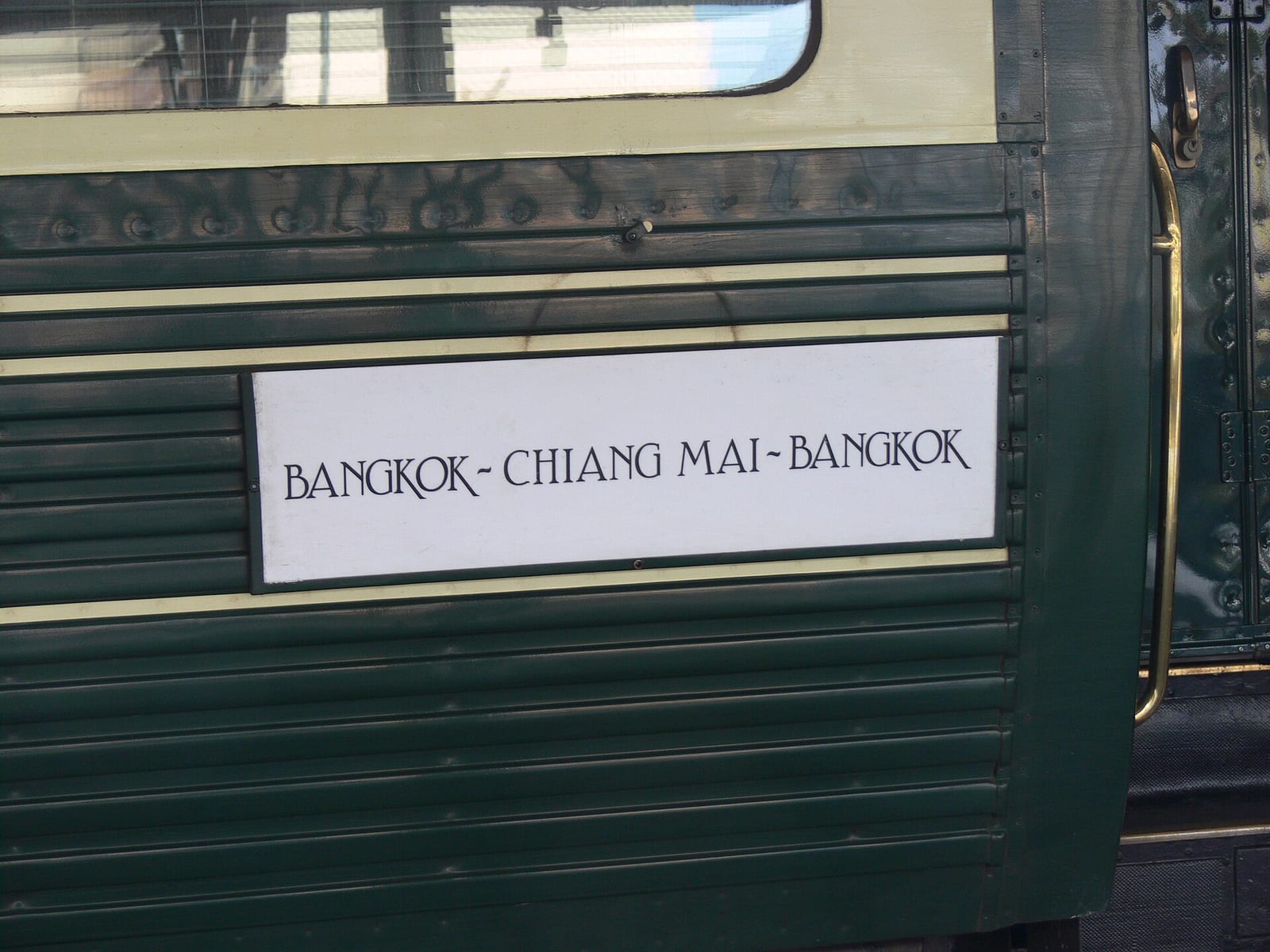
It isn't, any more. Covid stopped the train in 2020, and when Belmond brought it back on 12 February 2024 it came back smaller and more focused: two seasonal Malaysian itineraries, out of Singapore and back to Singapore, and no Thailand at all. The destination plates on the carriage sides now read Singapore — Taman Negara — Penang — Singapore.
Something was lost there. But what remains is still four days of extraordinary indulgence through a country that rewards it — inland to a rainforest that predates the Amazon, north to the shophouses of Penang, and back down the peninsula with the observation car open at the rear and the jungle sliding past a few feet away.
The Journey
There are two itineraries now, and which one you get depends entirely on the month.
Wild Malaysia runs from March to October, and it is the one the train is really built for. It leaves Singapore, crosses the causeway into Johor, and runs north up the peninsula through the night. The next morning it turns inland at Gemas — where the main west-coast line meets the interior — and follows the Jungle Railway's own metals north-east to Merapoh.
Merapoh is a small place with a very large neighbour: Taman Negara, a tropical rainforest usually reckoned at something like 130 million years old, which makes it older than the Amazon and one of the oldest on the planet. You get off, you go into it — canopy walkways, leeches, hornbills, the noise — and then you come back to the train and somebody hands you a cold drink. That contrast is the whole proposition of this kind of travel, and the E&O makes no apology for it.
Then north again to Butterworth, on the mainland opposite Penang, and a ferry across to George Town: a UNESCO-listed tangle of Chinese shophouses, clan jetties, temples and colonial warehouses, with street food that people fly in for. After that the train turns round and runs back down the peninsula to Singapore. Four days, three nights, and you end where you started.
Essence of Malaysia, from November to February, does the same four days on a different loop — Singapore, Alor Setar up near the Thai border, Butterworth, Singapore — keeping out of the interior during the north-east monsoon, which is when the rainforest is at its wettest.
On board, the arithmetic is simple: the train is small, so everything is close. Marquetry and lacquer in the cabins, a dining car doing serious Malaysian and Thai cooking, a bar car with a piano, and — the best seat on the train — an open-sided observation car at the very back, where you can stand with the wind and the noise and watch the rails and the jungle run away behind you.
And if you have read that this train goes to Bangkok, or crosses the River Kwai, or takes you to Chiang Mai: it did, for thirty years, and it doesn't now. Half the travel writing online hasn't caught up.
Along the route
Joshua / Wikimedia Commons · CC BY-SA 4.0Carriages from New Zealand
The best fact about this train: its 31 carriages were built in Japan in 1972 for New Zealand, where they ran as the Silver Star. Twenty-four were later regauged and shipped to Southeast Asia. The most glamorous train in Asia is a hand-me-down.Aliff MR / Wikimedia Commons · CC BY-SA 4.0Into Taman Negara
The Wild Malaysia run turns inland at Gemas and stops at Merapoh, on the edge of a rainforest reckoned to be around 130 million years old — older than the Amazon. You go walking in it, then come back to a gin and tonic.FredTC / Wikimedia Commons · CC BY-SA 4.0The Bangkok era is over
From its first run in September 1993 the E&O was the Singapore-to-Bangkok train. Covid stopped it in 2020, and when it came back in February 2024 it came back smaller: two seasonal Malaysian loops, and no Thailand at all.A bit of history
Culture & experiences along the way
Aliff MR / Wikimedia Commons · CC BY-SA 4.0The most glamorous train in Asia
The E&O is a hotel you would book for its own sake. Aboard, the carriages are dressed in Malaysian and Thai marquetry, lacquer, rattan and cherrywood; there is a bar car with a pianist, and an open-sided observation car at the back for watching the jungle unspool. Milei.vencel / Wikimedia Commons · CC BY-SA 3.0
Penang for the day
The train reaches Butterworth, and a ferry crosses to George Town — a UNESCO-listed jumble of Chinese shophouses, clan jetties, colonial godowns and arguably the best street food in Southeast Asia. Two hundred percent / Wikimedia Commons · CC BY-SA 3.0 · cropped
All of it included
Four days, three nights, all meals, all excursions, the guides and the bar — booked as one package through Belmond. This is a hotel that happens to move, and it is priced like one.Timetables
The E&O is an all-inclusive package with fixed departure dates, run by Belmond — not a train you buy a seat on. Departures are roughly fortnightly through each itinerary's season, all 4 days / 3 nights, round trips from Singapore.
| Wild Malaysia | Essence of Malaysia | |
|---|---|---|
| Season (2026) | March–October | November–March |
| Route | Singapore–Gemas–Merapoh (Taman Negara)–Butterworth–Singapore | Singapore–Alor Setar–Butterworth–Singapore |
| Length | 4 days / 3 nights | 4 days / 3 nights |
| The draw | Taman Negara rainforest + Penang | Northern Malaysia + Penang |
There are also occasional special departures in 2026 (a Tiger Express in May, festive journeys in late December).
Good to know:
- There is no Bangkok service. The single most important thing to know, and the thing most sources get wrong — the Singapore–Bangkok run ended in 2020; the train relaunched in February 2024 as Malaysia-only.
- The season picks your itinerary. If you specifically want Taman Negara, travel between March and October.
- Both are round trips from Singapore — you fly in and out of Singapore, which keeps the logistics easy.
- Everything is included — meals, wines and spirits, excursions and guides. You are buying a package, not a fare.
- Check the current itineraries before you plan around ours — Belmond has changed this train's route before.
Seasons and dates as of 2026. Confirm the dated departure calendar with the operator — see the Tickets section below.
Tickets
You book the E&O as a package through Belmond, months ahead, and the price covers the whole four days — cabin, all meals, drinks, every excursion and guide. There are two itineraries, really one train and two seasons: Wild Malaysia from March to October, which turns inland for Taman Negara and is the one to want; and Essence of Malaysia in the monsoon months, routed up the peninsula instead. Cabins run from Pullman through State to Presidential, the difference being space.
Book far ahead — short train, short seasons, global demand. Do not plan a Bangkok connection, whatever an older guidebook says: there isn't one any more. Singapore at both ends makes flights simple. And pack something smart, because dinner on this train is a dress-up occasion and people enjoy it.
Book your tickets
Wild Malaysia
Mar–Oct · 4 days / 3 nights
Singapore–Gemas–Merapoh–Butterworth and back to Singapore, with the rainforest of Taman Negara at the heart of it and Penang at the top. The itinerary the carriage plates now carry. Booked as an all-inclusive package through Belmond.
Book Tickets (opens in a new tab, on Belmond)via BelmondEssence of Malaysia
Nov–Feb · 4 days / 3 nights
The winter itinerary, running Singapore–Alor Setar–Butterworth–Singapore instead — the same train and the same four days, routed up the peninsula rather than into the forest.
Book Tickets (opens in a new tab, on Belmond)via BelmondRail Passes
Content coming soon.
Places to Visit
The excursions are built into the fare, and the train's short list is a good one. Which places you actually see depends on the itinerary: Taman Negara and the Merapoh caves belong to Wild Malaysia (March–October), Alor Setar to Essence of Malaysia (November–February), and Penang and Singapore to both.
One stop gets no entry below. Gemas is not a sightseeing halt but a junction that matters: this is where the west-coast main line meets the interior, and where the E&O turns onto the same metals the Jungle Railway uses.
 Ldc / Wikimedia Commons · Public domain · cropped
Taman Negara
The Wild Malaysia run stops at Merapoh, on the western edge of a rainforest reckoned at around 130 million years old — never glaciated, never cleared, older than the Amazon. The Sungai Relau entrance opened to visitors in August 1993, and a jeep track runs fourteen kilometres to Kuala Juram at the foot of Gunung Tahan (2,187 m), a three- to four-day climb. Belmond's excursions run from tiger conservation to sunrise yoga. Mohd Samsi Sumairi / Wikimedia Commons · CC BY-SA 4.0 · cropped
The Merapoh caves
The limestone around Merapoh holds several hundred caves, only a fraction of them explored and about a dozen open to visitors — and the E&O sends guests in to them by e-bike. Gua Tahi Bintang, the Meteor Shower Cave, was found only at the end of 2012, runs some 500 metres, and takes its name from the streaked mineral formations pouring down one wall. The rock itself is over 300 million years old. Cmglee / Wikimedia Commons · CC BY-SA 3.0 · cropped
The clan jetties, George Town
Seven wooden villages stand on stilts off Weld Quay, built between the 1880s and the 1960s, one to each Chinese clan — Chew, Lim, Tan, Yeoh, Lee, Koay. Chew Jetty is the oldest and the largest, about 75 houses and 600 residents strung along a plank walkway over the water, and the one that genuinely welcomes visitors. All of it falls inside the George Town UNESCO listing of 2008, and people still live there. Photo by CEphoto, Uwe Aranas / Wikimedia Commons · CC BY-SA 3.0 · cropped
Kek Lok Si
Malaysia's largest Buddhist temple climbs a hillside above Air Itam, begun in 1890 at the instigation of the abbot Beow Lean. The Pagoda of Ten Thousand Buddhas, finished in 1930, is seven storeys and thirty metres, and it is three buildings in one: a Chinese octagonal base, a Thai middle tier, a Burmese crown. Above it a 30.2-metre Guanyin of 2002 stands under a pavilion of sixteen bronze columns. NG ZHENG HUI / Wikimedia Commons · CC BY-SA 4.0 · cropped
Alor Setar
The Essence of Malaysia itinerary runs up the rice plains of Kedah instead of turning into the forest, and Masjid Zahir is what it comes for: built 1912–15, five domes and a scatter of minarets, its design borrowed from the Azizi Mosque across the water in Langkat, Sumatra. It stands over the graves of Kedah warriors killed resisting the Siamese invasion, and the state's Quran-recital contest is still held here. alicereneztay / Wikimedia Commons · CC BY 2.0 · cropped
Tanjong Pagar, Singapore
Every itinerary begins and ends in Singapore, and the E&O's own first home was Tanjong Pagar, completed on 3 May 1932 — an Art Deco terminus with four white marble figures by the Florentine sculptor Angiolo Vannetti standing for Agriculture, Industry, Commerce and Transport. Trains stopped on 1 July 2011; it was gazetted a national monument that April, and its conversion is not due before the end of the decade. Balon Greyjoy / Wikimedia Commons · CC0 · cropped
Kuala Lumpur
No longer a scheduled stop on either itinerary, but an easy day at either end of the trip. The Sultan Abdul Samad Building went up between 1894 and 1897 — Indo-Saracenic, red brick banded in white plaster, a 41-metre clock tower — and it was on the padang in front of it that the Union Jack came down at midnight on 31 August 1957. It reopened to the public on 2 February 2026 after an eleven-month restoration.Where to Sleep
For three of the four nights the train is the hotel, and the cabin grade is the whole decision.
- Pullman — the entry cabin: a compact, beautifully finished room converted between sofa by day and beds by night, with a private shower room. Small, in the way that all great train cabins are small.
- State — more floor, a proper sitting area, and space to be in the room during the day rather than in the bar.
- Presidential — two windows, a lot of teak, and the sort of price that answers its own question.
All of them are ex-Silver Star carriages from 1972, rebuilt to the point of unrecognisability — which is worth remembering while you're admiring the marquetry.
At the ends, both itineraries start and finish in Singapore:
- Singapore — worth a night or two either side. Stay in the colonial core near the old Tanjong Pagar station, where the E&O used to depart, or anywhere on the MRT; the city is absurdly easy.
- Penang — the one place to consider extending independently. The train gives you a day in George Town, which is not enough. A couple of nights in a restored shophouse hotel, eating your way through the hawker centres, is one of the best things in Southeast Asia.
- Kuala Lumpur — an easy add-on by KTM's fast electric trains if you want more of the peninsula.
Timing: March–October for Taman Negara, November–February otherwise — and note that the November-to-February window exists precisely because the north-east monsoon is drowning the interior at the time.
Comments
Facebook comments
Facebook will see your IP address and can set cookies. If you are signed in to Facebook it can connect this visit to your account.
Loads Facebook (Meta) content from now on, across the site. Undo this at any time.